 0
0
 0
0
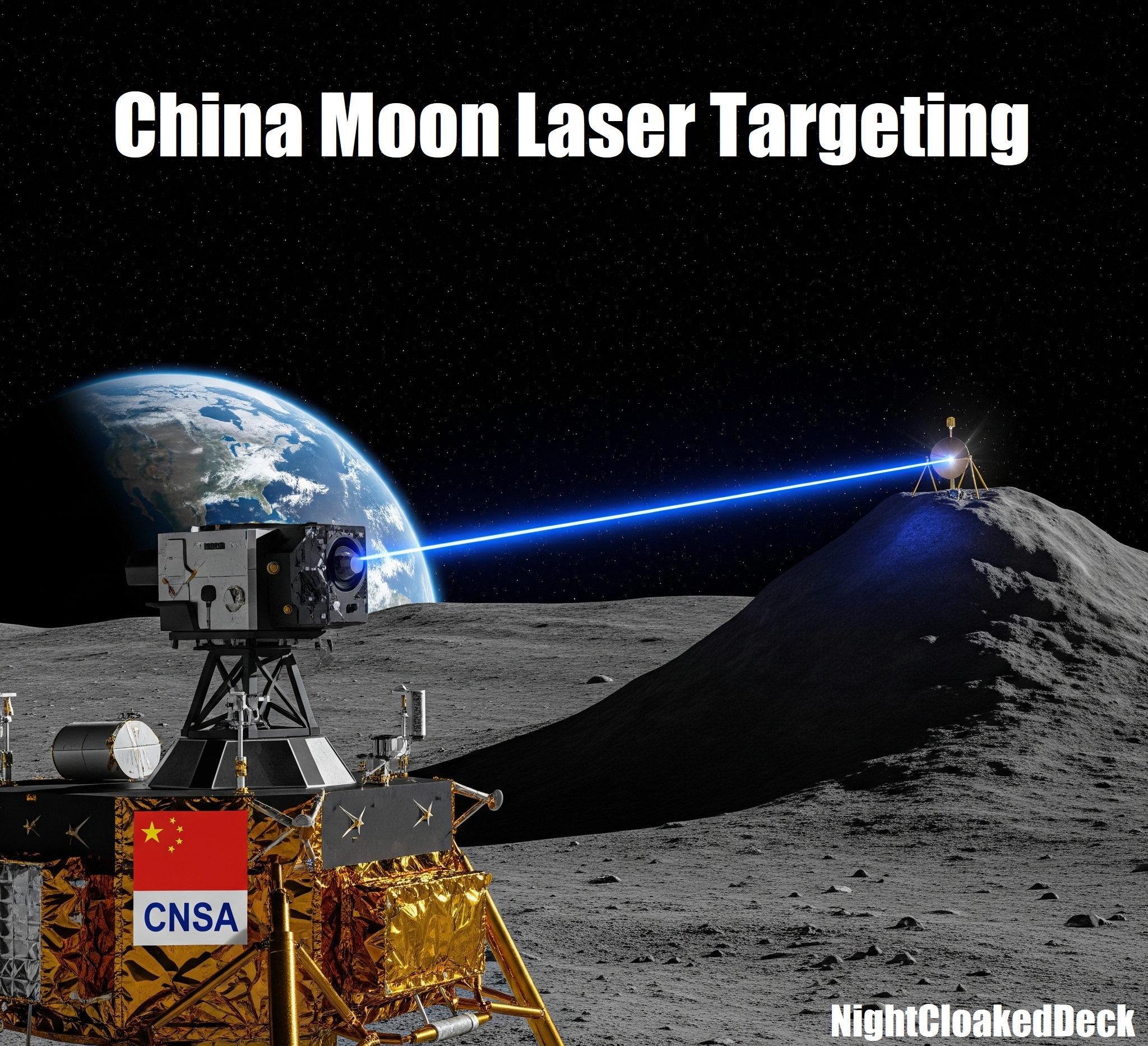
China’s Deep Space Exploration Laboratory (DSEL) has reached a historic milestone in space communication and navigation by successfully conducting satellite laser ranging between Earth and the Moon during daylight hours. This technological feat, made possible using the Tiandu-1 satellite, not only overcomes the long-standing issue of solar interference but also paves the way for advanced lunar missions, precision landings, and coordinated robotic operations on the Moon’s surface.
What Did China Find on the Backside of the Moon?
While the recent experiment focused on laser targeting, it aligns with China’s broader mission objectives tied to the lunar south pole and far side of the Moon. These lesser-explored regions have been of great scientific interest due to:
-
Presence of permanently shadowed craters potentially containing water ice
-
Geological formations that are far older than those on the near side
-
Strategic vantage points for radio astronomy and future lunar bases
Though the laser experiment wasn’t specifically designed for discovery, it supports the groundwork for precise navigation and communication, which are essential to study and utilize the Moon’s backside efficiently.
Daylight Laser Ranging: A First in Human History
Laser ranging is not a new technique, but until now, it was mostly confined to night-time operations to avoid interference from the Sun. In April 2025, China shattered this limitation by successfully firing a laser beam in broad daylight from Earth and hitting a satellite orbiting the Moon with pinpoint accuracy.
Main Highlights of the Experiment:
-
Date of experiment: April 26-27, 2025
-
Distance covered: 130,000 kilometers (80,778 miles)
-
Precision achieved: Comparable to hitting a human hair from 6.2 miles away
-
Satellite involved: Tiandu-1, part of China’s advanced lunar architecture
-
Conducted by: Deep Space Exploration Laboratory (DSEL)
-
Purpose: Precision measurement for navigation, guidance, and fleet coordination
This is a groundbreaking leap toward building a real-time, Earth-to-Moon communication network, even under sunlit conditions that were previously deemed too disruptive.
What Was the Laser Experiment on the Moon?
The primary goal of the experiment was to bounce a laser signal off the Tiandu-1 satellite, which is in lunar orbit, and measure the return time with extreme accuracy. This provides crucial data for:
-
High-precision landing systems
-
Orbital tracking
-
Real-time lunar surface coordination
-
Future satellite constellation management
By using photon-level detectors and advanced noise filtering techniques, Chinese scientists managed to track the signal despite daylight and massive cosmic noise. This is a first-of-its-kind advancement, setting a new global standard for laser ranging.
China’s Breakthrough in Laser Technology
This success isn’t a one-off. It’s part of China’s larger space strategy that integrates quantum communication, optical tracking, and laser-based telemetry to support lunar exploration, Mars missions, and beyond.
Key Technological Breakthroughs:
-
Daylight tracking precision: Previously only viable at night
-
Photon-level accuracy: Essential for deep-space operations
-
Laser-to-satellite reflection range: Over 130,000 km without signal degradation
-
Operational consistency: Achievable even under solar radiation
This technology will not only benefit space exploration but could revolutionize earthbound systems like global positioning, intercontinental data transmission, and satellite security systems.
Why Did China Hit the Moon with a Laser?
Contrary to dramatic headlines, China did not aim to attack or harm the Moon. The term “hit the Moon with a laser” refers to the scientific act of laser ranging, where light pulses are sent and received across massive distances to determine location, distance, and relative motion with millimeter accuracy.
The motivations behind this experiment are strictly technological and exploratory, including:
-
Creating an Earth-Moon communication lattice
-
Enabling coordinated operations of multiple lunar rovers
-
Supporting autonomous landing and docking missions
-
Testing future capability for Mars-bound missions
This effort is aimed at enabling sustainable lunar exploration, especially in challenging environments like the south pole, where sunlight conditions vary drastically and communication is crucial.
Implications for Future Lunar Missions
The success of daylight laser ranging opens up a new frontier in space missions, particularly for the following applications:
1. High-Precision Lunar Landings
With the ability to calculate exact coordinates in real time, landers can now navigate autonomously to pinpoint targets, reducing the need for large fuel reserves or wide error margins.
2. Fleet Coordination of Rovers
Imagine a swarm of lunar robots, all synced and managed via a light-speed laser network, executing scientific missions, mining, or construction in harmony. This is no longer fiction but a realistic projection.
3. Permanent Lunar Bases
For a manned Moon base, continuous and accurate Earth-Moon communication is vital. Laser-based links offer low-latency, high-bandwidth alternatives to traditional radio systems.
4. Beyond the Moon
China’s mastery of daylight laser ranging is a stepping stone toward interplanetary missions, especially to Mars, where similar challenges of distance and signal disruption exist.
Overcoming the Challenge of Solar Interference
Traditionally, solar radiation has been a formidable barrier to laser-based deep-space communication, as sunlight drowns the returning signal. China tackled this by:
-
Implementing extremely narrow wavelength filters
-
Deploying quantum-level detectors
-
Using adaptive optics to correct for Earth’s atmospheric distortion
-
Operating in synchronized windows with precise orbital timing
This scientific achievement makes 24/7 communication with lunar assets a reality.
Strategic and Global Significance
Beyond the technological triumph, this development sends a clear message: China is positioning itself as a leader in lunar exploration and deep-space communication.
It aligns with its Chang’e lunar mission series
Supports international collaborations on the International Lunar Research Station (ILRS)
Sets a technological benchmark for NASA, ESA, and private space companies
This breakthrough redefines how nations approach space exploration, moving from simple observation to active management and real-time control of extraterrestrial assets.
Summary: China’s Laser Leap to the Moon
| Key Aspect | Detail |
|---|---|
| Experiment Name | Daylight Satellite Laser Ranging |
| Date Conducted | April 26-27, 2025 |
| Distance | 130,000 km (80,778 miles) |
| Precision | Hit accuracy like a human hair from 6.2 miles |
| Technology Used | Tiandu-1 satellite, photon detectors, adaptive optics |
| Purpose | Earth-Moon navigation, landing precision, rover coordination |
| Significance | First daylight laser ranging to the Moon in history |
Conclusion
The successful laser targeting of the Moon by China is not just an experiment—it’s a defining moment in the next era of space exploration. With laser precision, solar resilience, and scientific intent, this achievement establishes a new technological frontier that benefits not just China, but the entire global space community.


