 0
0
 0
0
Air travel is often seen as a seamless bridge between destinations, but sometimes, the skies throw unexpected curveballs. In May 2025, Delta Flight DL275 became a prime example of this when it was forced to divert to Los Angeles International Airport (LAX) midway through its journey. This incident not only disrupted plans for hundreds of passengers but also sparked widespread curiosity about aviation safety, airline policies, and Delta’s operations. From questions like “What is the 45-minute rule for Delta?” to rumors about massive compensation offers, we’ll unpack the full story here. Drawing from reliable reports and industry insights, this article explores the diversion’s details, passenger impacts, and broader lessons for travelers.
The Journey That Took an Unexpected Turn: Flight DL275 Overview
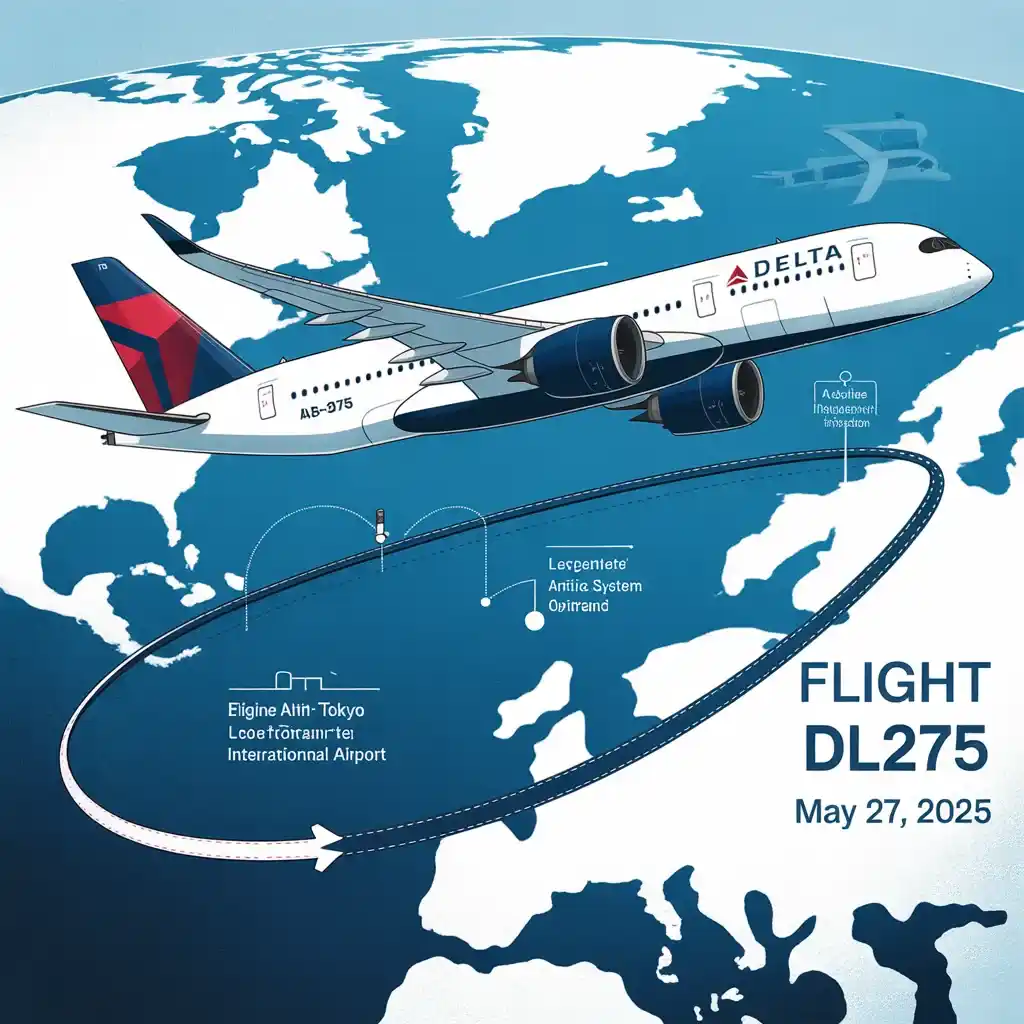
Delta Flight DL275 is a regular long-haul international route operated by Delta Air Lines, connecting Detroit Metropolitan Wayne County Airport (DTW) in Michigan to Tokyo Haneda Airport (HND) in Japan. On May 27, 2025, the flight departed from DTW’s Gate A46 around 1:15 PM local time, carrying passengers eager for business trips, vacations, or family reunions across the Pacific. The aircraft in question was a state-of-the-art Airbus A350-900, known for its advanced technology, fuel efficiency, and passenger comfort features like quieter cabins and larger windows.
This transpacific flight typically spans about 13 hours, cruising over the North Pacific Ocean at high altitudes. Equipped with modern navigation systems and safety redundancies, the A350 is designed to handle long distances reliably. However, on this particular day, the routine was shattered when a technical anomaly prompted a precautionary diversion after roughly five hours in the air. Instead of continuing to Tokyo, the plane turned back toward the U.S. West Coast, landing safely at LAX.
Mid-Air Alert: What Triggered the Diversion?
As the flight progressed over the vast Pacific, the crew detected an issue with the engine anti-ice system—a critical component that prevents ice buildup on engine parts during flights through cold, high-altitude conditions. While the problem didn’t pose an immediate danger, pilots adhered to strict safety protocols and decided to divert rather than risk escalation.
Engine anti-ice systems are vital for preventing performance degradation or failures in icy environments, which can occur even in seemingly clear skies at cruising altitudes. According to aviation experts, such systems use hot air from the engine to melt or prevent ice formation on inlets and sensors. In this case, the malfunction was caught early through the aircraft’s continuous monitoring systems, showcasing the effectiveness of modern onboard diagnostics.
The decision to divert wasn’t taken lightly. Pilots consulted with ground control and Delta’s maintenance teams, weighing factors like fuel levels, weather, and the nearest suitable airport. This proactive approach aligns with the aviation industry’s “safety first” ethos, where even minor anomalies are treated with utmost caution to avoid potential complications.
Choosing LAX: Strategic Reasons Behind the Diversion Airport
Why LAX? Los Angeles International Airport was selected for several practical reasons. As one of the busiest hubs in the U.S., LAX boasts extensive maintenance facilities, a large team of certified engineers, and robust passenger handling capabilities. It’s also a major Delta base, making it easier to access spare parts and technical support for the A350.
Geographically, after five hours westward, LAX was a logical turnaround point closer than pressing on to Honolulu or other Pacific islands, yet equipped to handle a widebody jet’s needs. Diversion airports are chosen based on runway length, weather conditions, and availability of services. In this instance, LAX’s infrastructure minimized downtime, allowing for quick inspections and repairs. This choice also helped reduce further disruptions, as Delta could rebook passengers from a well-connected airport.
Onboard Tension: Passenger Stories and Reactions
Imagine being thousands of feet in the air, settled in for a long flight, when the captain announces a diversion. For passengers on DL275, the experience ranged from mild confusion to heightened anxiety. Social media buzzed with real-time updates: some shared whispers of “engine trouble,” while others noted the cabin crew’s calm demeanor helping to ease nerves.
One Reddit user, claiming to be onboard, described it as “not a fun night” due to the uncertainty. Flight attendants distributed snacks and provided reassurances, fostering a sense of community among travelers. Upon landing at LAX, there were no injuries reported, and emergency services were on standby as a precaution. Many passengers expressed gratitude for the safe outcome, turning what could have been a nightmare into a memorable tale of aviation resilience.
Delays inevitably followed, with some facing overnight stays or rescheduled flights. Yet, the shared experience highlighted human adaptability strangers bonding over rerouted plans and the relief of touching down safely.
Delta’s Handling: Support and Communication Post-Diversion
Delta Air Lines responded swiftly, prioritizing passenger welfare. Ground teams at LAX assisted with rebookings, hotel accommodations, and meal vouchers for those affected. The airline issued a public statement emphasizing safety and apologizing for the inconvenience, reinforcing their commitment to transparent communication.
In terms of compensation, standard policies applied: refunds for unused portions, rebooking without fees, and potential vouchers for future travel. However, this incident didn’t involve the rumored $30,000 payouts seen in other Delta events, like the February 2025 Toronto crash-landing where passengers received substantial offers “with no strings attached.” For DL275, assistance was more routine, focusing on getting everyone to their destinations efficiently.
Busting Myths and Answering Key Questions About Delta
The diversion sparked a flurry of questions online. Let’s address the specifics head-on.
What Is the 45-Minute Rule for Delta?
Delta’s 45-minute rule refers to their baggage check-in policy for domestic flights, implemented in April 2025. Passengers must drop off checked bags at least 45 minutes before departure (60 minutes at busy hubs like New York’s JFK) to ensure timely security screening and loading. This change aims to improve on-time performance and reduce mishandled luggage. For international flights like DL275, similar guidelines apply, with recommendations to arrive at the gate 45 minutes early. It’s a practical measure to streamline operations without compromising safety.
Did Delta Offer Passengers $30,000?
No, not for this diversion. The $30,000 offers were for survivors of Delta Flight 4819’s dramatic crash-landing in Toronto, where the plane flipped upside down. That gesture, totaling potentially millions, was a “no strings attached” response to a far more severe incident. For DL275’s precautionary diversion, compensation was limited to travel disruptions, not large cash sums.
Does Delta Not Fly to Japan?
Absolutely not Delta maintains robust service to Japan. They offer nonstop flights to Tokyo Haneda from hubs like Los Angeles, Seattle, Honolulu, Atlanta, Detroit, and Minneapolis. Routes to Osaka and other cities are also available, with one-way fares starting around $467. Despite the DL275 hiccup, Delta’s Japan network remains strong, serving both business and leisure travelers.
What Is Delta’s Highest Class?
Delta’s top-tier offering is Delta One, their premium business class on long-haul international and select domestic routes. It features lie-flat seats, gourmet dining, priority boarding, and access to exclusive lounges. Unlike domestic First Class (which is more like premium economy on shorter flights), Delta One provides a luxurious, privacy-focused experience with amenities like adjustable leg rests and high-end entertainment. On the A350 used for DL275, Delta One suites offer sliding doors for ultimate seclusion.
Aviation Safety: Protocols That Kept Everyone Safe
Flight diversions underscore the rigorous safety measures in place. Modern aircraft like the A350 transmit real-time data to ground teams, allowing for proactive interventions. Crew training emphasizes quick decision-making, with simulations covering scenarios from technical glitches to medical emergencies.
The Federal Aviation Administration (FAA) and international bodies mandate these protocols, ensuring anomalies are addressed before they escalate. In DL275’s case, the diversion prevented any risk, exemplifying how safety trumps schedules.
Are Flight Diversions Really That Common?
Yes, more than you might think. Industry stats show diversions occur in 1-3% of commercial flights annually, translating to thousands worldwide. Common causes include weather, mechanical issues, or onboard medical needs. While inconvenient, they highlight aviation’s low-risk profile flying remains one of the safest travel modes.
Key Takeaways for Future Travelers
This incident teaches valuable lessons:
- Prioritize Flexibility: Build buffer time into itineraries for unexpected changes.
- Understand Policies: Know rules like Delta’s 45-minute baggage cutoff to avoid stress.
- Appreciate Safety: Diversions are protective measures, not failures.
- Stay Informed: Use apps and airline alerts for real-time updates.
In the end, while diversions disrupt, they reaffirm the industry’s dedication to passenger well-being.
Wrapping Up: A Reminder of Aviation’s Vigilance
The Delta Flight DL275 diversion to LAX in May 2025 was a stark reminder that even in our high-tech world, safety demands constant vigilance. No one was hurt, and operations resumed swiftly, but it prompted important discussions on airline practices. Whether you’re curious about Delta’s premium classes or debunking compensation myths, remember: air travel’s unpredictability is matched only by its commitment to getting you home safely. Next time you board, take comfort in the unseen safeguards at work.


