 0
0
 0
0
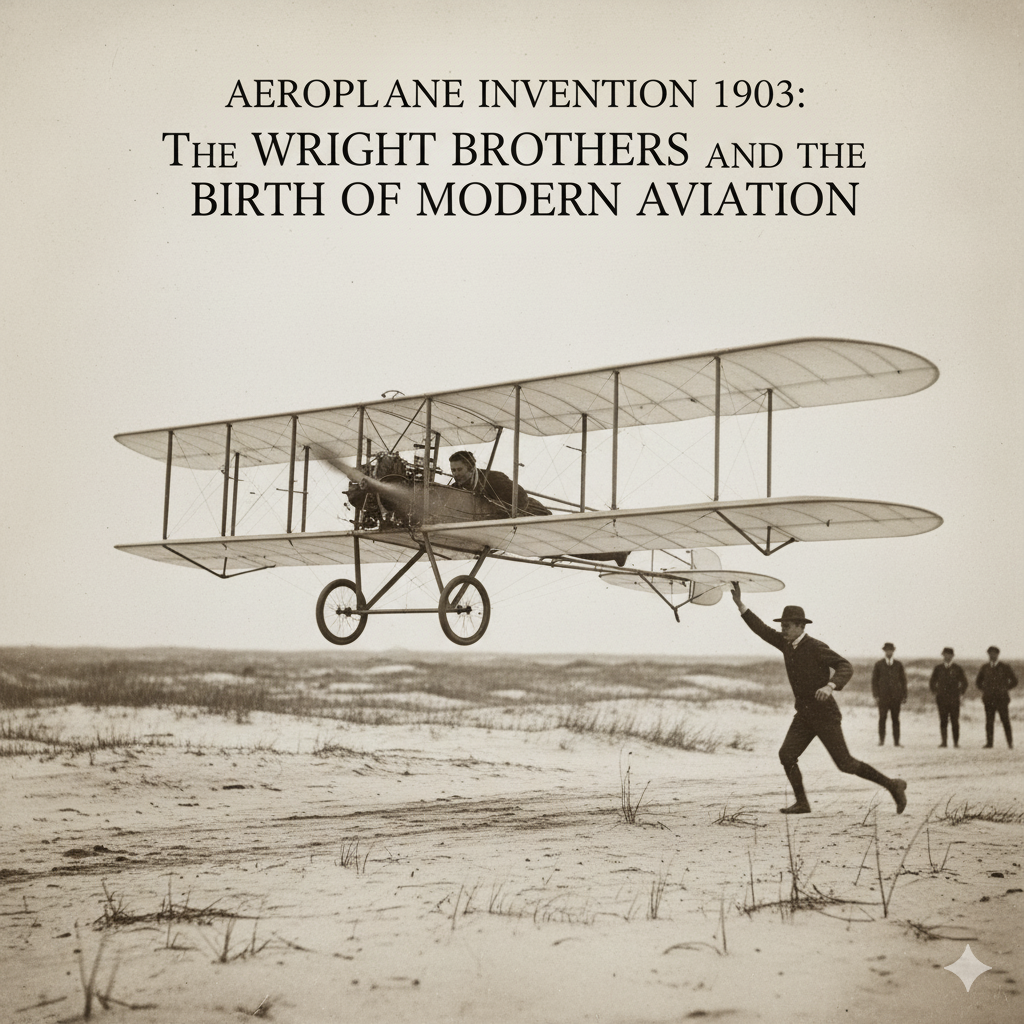
On December 17, 1903, in the sandy dunes of Kill Devil Hills near Kitty Hawk, North Carolina, the world changed forever. Two bicycle makers from Dayton, Ohio Orville and Wilbur Wright achieved what many thought impossible: the first successful powered, sustained, and controlled heavier-than-air flight. Their machine, the Wright Flyer, covered just 120 feet in its maiden voyage, but those 12 seconds marked the dawn of modern aviation.
This groundbreaking achievement was not just about a single flight but about years of relentless experimentation, problem-solving, and visionary thinking. Let’s take a closer look at how the Wright brothers turned the dream of flight into reality.
The Wright Brothers’ Path to Invention
Before they became aviation pioneers, Orville and Wilbur Wright were successful bicycle manufacturers in Dayton, Ohio. Their shop gave them the mechanical expertise, patience, and innovative mindset required to tackle one of humanity’s greatest challenges — controlled flight.
Key factors that shaped their journey:
-
Inspiration from earlier pioneers: They studied works of aviation thinkers like Otto Lilienthal and Octave Chanute.
-
Bicycle mechanics background: Their experience with gears, balance, and mechanics gave them unique insights into control and design.
-
Focus on control: Unlike many others who tried to build planes that could simply lift off, the Wrights concentrated on how to steer and balance an aircraft in motion.
The Wright Flyer: The Aircraft That Made History
The 1903 Wright Flyer was unlike anything built before. It was a biplane constructed primarily of spruce wood, muslin fabric, and steel wire bracing. Its design was simple yet revolutionary.
Specifications of the Wright Flyer (1903):
-
Wingspan: 40 feet 4 inches
-
Weight: 605 pounds (without the pilot)
-
Engine: 12-horsepower gasoline engine built by their mechanic, Charles Taylor
-
Propellers: Two wooden propellers designed and hand-carved by the brothers
-
Controls: Three-axis control system (pitch, roll, yaw)
This control system was the true genius of the design. It allowed pilots to steer in all directions and maintain stability the foundation of modern aeronautics.
The First Flights: December 17, 1903
On that cold, windy morning, the Wright brothers were ready to test their invention. They made four flights that day, taking turns as pilots.
Details of the flights:
-
First Flight – Orville Wright piloted:
-
Duration: 12 seconds
-
Distance: 120 feet
-
-
Second Flight – Wilbur Wright piloted:
-
Duration: 12 seconds
-
Distance: 175 feet
-
-
Third Flight – Orville again:
-
Duration: 15 seconds
-
Distance: 200 feet
-
-
Fourth Flight – Wilbur piloted:
-
Duration: 59 seconds
-
Distance: 852 feet
-
Though modest by today’s standards, these flights proved that controlled, powered flight was possible. The brothers had opened the door to the skies.
Why the 1903 Flight Was Revolutionary
The Wright brothers’ success wasn’t just about flying a few hundred feet. It was about the principles they discovered and applied, which remain essential in aviation today.
-
Three-Axis Control System: The ability to control pitch (up and down), roll (tilting wings), and yaw (left and right) made their aircraft maneuverable. This principle is still used in all airplanes.
-
Wind Tunnel Testing: The Wrights built a small wind tunnel to test wing shapes, allowing them to gather accurate data rather than relying on guesswork.
-
Propeller Innovation: They realized propellers function like rotating wings. By designing their own propellers, they achieved greater efficiency than any of their contemporaries.
-
Mechanical Craftsmanship: Their background in bicycles meant they knew how to build lightweight yet strong structures.
The Location: Why Kitty Hawk, North Carolina?
The Wright brothers chose Kill Devil Hills near Kitty Hawk for practical reasons:
-
Steady Winds: The coastal location offered reliable wind conditions for lift.
-
Soft Sand: In case of crashes (which happened often in tests), the sand reduced damage.
-
Isolation: It provided privacy to test their experiments away from curious crowds and competitors.
This location has since become a landmark in aviation history, drawing visitors from around the world.
The Road to Success: Years of Experimentation
The 1903 flights were the culmination of a four-year program of glider testing and aeronautical research. From 1900–1902, the Wrights conducted hundreds of flights with unpowered gliders, learning how to control lift, drag, and stability.
Key Milestones Before 1903:
-
1900 Glider: First attempts at manned gliding.
-
1901 Glider: Failed experiments that pushed them to rethink data on lift and drag.
-
1902 Glider: Breakthrough with successful control, forming the basis of the 1903 Flyer.
By the time they achieved powered flight, they were not just inventors — they had become the first true aeronautical engineers.
The Wright Brothers’ Legacy in Aviation
The invention of the airplane changed everything — from travel and commerce to warfare and global connectivity. But beyond their 1903 success, the Wright brothers made lasting contributions.
Major contributions:
-
Aeronautical Engineering: Their scientific approach set the foundation for modern aerospace design.
-
Demonstrations Worldwide: By 1908–1909, they were flying in France and the U.S., proving their invention on the global stage.
-
Commercialization: They founded the Wright Company, manufacturing planes and training pilots.
-
Inspiration for Generations: Their work sparked an aviation boom, inspiring inventors and explorers worldwide.
Interesting Facts About the 1903 Invention
The first flight photograph was taken by John T. Daniels, a member of the U.S. Life-Saving Service.
The Wright Flyer is preserved at the Smithsonian National Air and Space Museum in Washington, D.C.
The longest flight on December 17 was nearly the length of three football fields.
Charles Taylor, their shop mechanic, deserves recognition for building the custom engine that made the flights possible.
Why the Wright Brothers Succeeded Where Others Failed
Many inventors attempted flight before the Wrights including Samuel Langley and Alberto Santos-Dumont. But the Wright brothers succeeded because they:
-
Focused on control before power.
-
Relied on data and experiments, not assumptions.
-
Worked with precision mechanics and innovative designs.
-
Maintained persistence despite repeated crashes and skepticism.
Their combination of scientific thinking and hands-on craftsmanship gave them the edge.
Conclusion: A Legacy That Still Soars
The 1903 invention of the aeroplane by Orville and Wilbur Wright was more than a mechanical breakthrough it was the beginning of a new era. What started as a 12-second hop over the sands of North Carolina has evolved into a world where millions of people fly across continents every day.
The Wright brothers’ relentless curiosity, persistence, and innovative spirit remind us that with vision and determination, even the most impossible dreams can take flight.


