 0
0
 0
0
Introduction
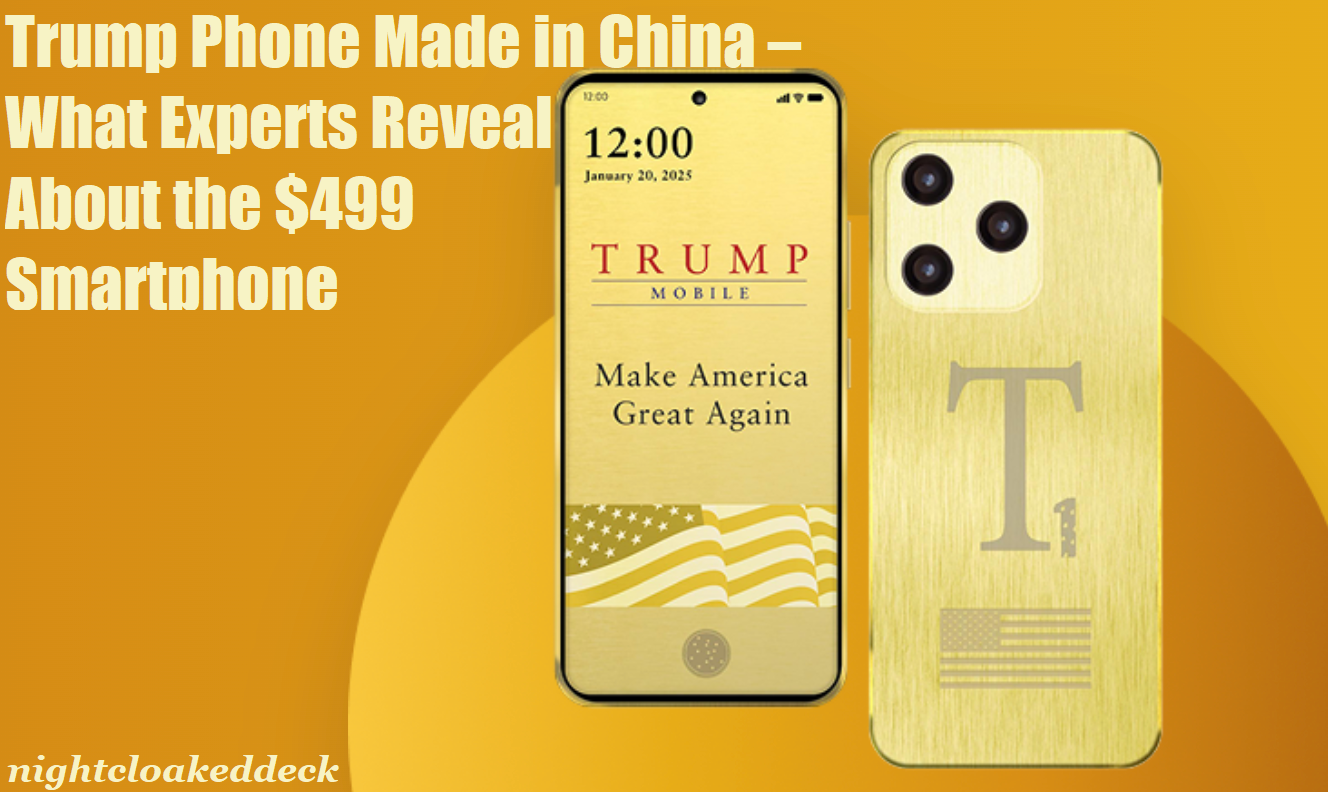
The recent announcement of a Trump-branded smartphone has stirred major debate in political and tech circles. With a price tag of $499, the device has been promoted as a U.S.-manufactured alternative to mainstream smartphones. However, experts argue that the Trump phone will likely be made in China, despite claims suggesting domestic production. This revelation has raised important questions about transparency, supply chain reliance, and the political implications of outsourcing manufacturing overseas.
In this article, we analyze the origins of Trump’s smartphone project, the claims versus reality of its manufacturing process, and why experts are convinced that China will be central to the production.
The Announcement of the Trump Smartphone
Earlier this year, the Trump Organization unveiled its plan to release a smartphone positioned as a direct competitor to Apple and Samsung. The phone, priced at $499, was marketed as:
-
Affordable but premium compared to flagship devices.
-
Secure, catering to privacy-conscious users.
-
American-made, aligning with Donald Trump’s long-standing stance on bringing jobs back to the U.S.
While the idea generated excitement among supporters, analysts quickly raised concerns over the logistics of producing smartphones entirely within the U.S.
Experts Say Manufacturing Likely Based in China
Why Analysts Doubt U.S. Production
Building a smartphone requires a highly complex supply chain, including access to processors, memory chips, displays, batteries, and other precision components. Currently, the U.S. does not have the infrastructure to mass-produce smartphones at competitive prices.
Industry experts highlight several reasons the Trump phone will likely be made in China:
-
Established Supply Chains – China dominates smartphone assembly with factories like Foxconn producing devices for Apple, Google, and countless other brands.
-
Cost Efficiency – Building in the U.S. would significantly raise costs, making it impossible to market the device at $499.
-
Component Sourcing – Key parts such as OLED screens, lithium-ion batteries, and semiconductor chips are overwhelmingly manufactured in Asia.
-
Lack of U.S. Facilities – Even if designed in the U.S., assembling millions of units domestically would require a production base that does not exist today.
The Political and Economic Contradiction
Donald Trump has consistently emphasized “Made in America” manufacturing, criticizing companies like Apple for outsourcing. However, experts suggest that his smartphone initiative contradicts this stance.
-
On one hand, the marketing strategy leans on nationalism, appealing to consumers who want an American product.
-
On the other hand, the economic reality of global supply chains makes U.S.-only production virtually impossible.
This contradiction could damage credibility if consumers discover the Trump phone is indeed assembled overseas.
Can the U.S. Really Manufacture Smartphones?
The debate surrounding the Trump phone has reignited discussion about whether the United States can realistically bring smartphone manufacturing back home.
Challenges:
-
Labor Costs – American labor is significantly more expensive than in China.
-
Lack of Expertise – Decades of outsourcing have left the U.S. without large-scale assembly plants.
-
Supply Chain Gaps – Even if assembly is U.S.-based, most components would still need to be imported.
Possible Solutions:
-
Automation – Investing in robotics to reduce labor costs.
-
Incentives – Government subsidies to encourage domestic factories.
-
Strategic Alliances – Partnering with U.S.-based chipmakers like Intel to strengthen local production.
However, analysts say these solutions are long-term goals, not something feasible for Trump’s smartphone launch.
Trump Phone: Marketing vs Reality
Marketing Claims
-
Pitched as American-made.
-
Promoted as a secure and private device.
-
Designed to represent independence from big tech companies.
Likely Reality
-
Assembled in China, with some parts possibly sourced globally.
-
Marketed to a political base, rather than mainstream consumers.
-
Dependent on the same global infrastructure that powers other smartphone giants.
This contrast highlights the gap between branding and actual manufacturing practices.
Will Consumers Care If It’s Made in China?
A critical question remains: Will Trump’s supporters buy the phone even if it’s made in China?
Surveys suggest that:
-
Price-sensitive buyers may not care, as $499 is significantly lower than many premium devices.
-
Trump loyalists may accept the product regardless of its origin, prioritizing branding over supply chain transparency.
-
Tech-savvy consumers, however, are likely to be skeptical if claims of U.S. manufacturing prove misleading.
Ultimately, consumer trust will depend on how transparent the Trump Organization is about the phone’s origins.
Conclusion
The launch of the Trump smartphone has ignited both excitement and skepticism. While the device promises affordability and security at $499, the likelihood of production in China remains high, given the realities of global supply chains. This contradiction between political rhetoric and economic practicality underscores the complexities of modern technology manufacturing.
Whether or not the Trump phone succeeds in the marketplace will depend on consumer trust, transparency about manufacturing origins, and its ability to compete with established giants like Apple and Samsung.


