 0
0
 0
0
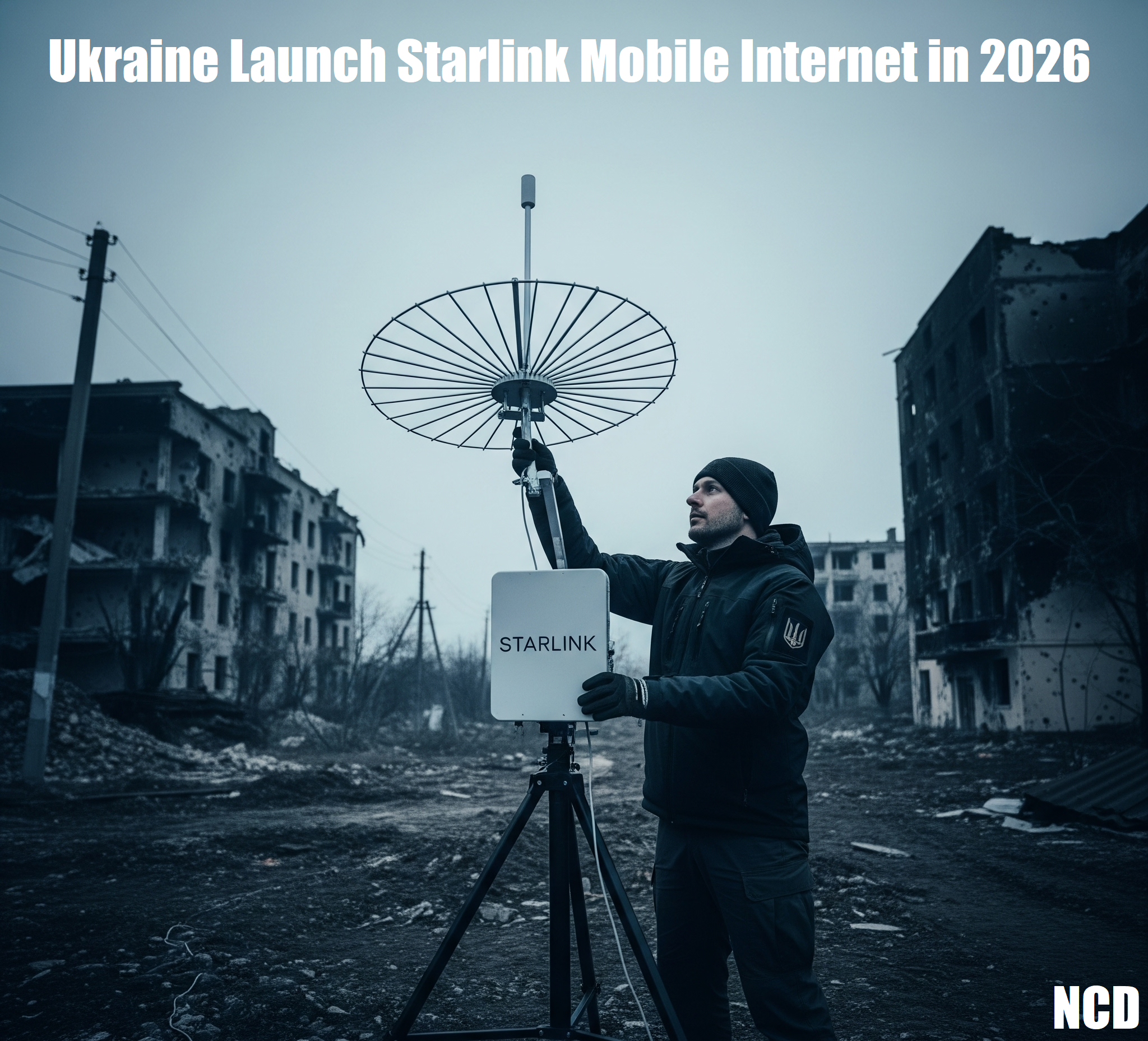
In a landmark technological development, Ukraine is set to become the first European nation to launch Starlink mobile Internet services by mid-2026, marking a pivotal transformation in mobile connectivity across war-impacted regions. Spearheaded by Kyivstar, Ukraine’s leading telecom operator, in partnership with Elon Musk’s SpaceX, the project aims to deliver direct-to-cell satellite Internet and voice services directly to smartphones without the need for ground-based towers.
Kyivstar and SpaceX Partnership: A Leap Into the Future
Kyivstar, owned by global telecom firm VEON, has confirmed that field tests have already commenced under a strategic agreement signed in late 2024 with SpaceX’s Starlink broadband constellation. This cutting-edge collaboration intends to bring direct-to-cell satellite Internet coverage to even the most remote and war-damaged zones of Ukraine, ensuring national digital resilience.
Direct-to-cell technology enables satellites equipped with modems to behave like traditional cell towers in orbit. They beam Internet and voice signals directly to standard smartphones, bypassing terrestrial infrastructure that is often vulnerable to destruction in conflict zones. With this deployment, Ukraine is pioneering a model of satellite communication infrastructure that could reshape the future of global telecom.
Phased Launch Timeline: From Messaging to Full Satellite Internet Access
The project’s rollout is planned in multiple phases, ensuring a stable and scalable implementation:
Phase 1 – Over-the-top (OTT) Messaging Services (End of 2025):
By the close of 2025, Ukrainian mobile users will gain access to OTT messaging services through satellite connectivity. This includes platforms like WhatsApp, Signal, and Telegram, which will function seamlessly via Starlink’s satellite signals even during total infrastructure blackouts.
Phase 2 – Mobile Satellite Broadband and Voice (Q2 2026):
Beginning in the second quarter of 2026, Kyivstar and Starlink aim to deliver broadband mobile Internet and voice communication via satellite. This phase will be critical in empowering millions of Ukrainians with reliable access to information, communication, and digital services, irrespective of on-ground disruptions.
Ukraine Sets a New Standard in Satellite Mobile Services
Ukraine’s initiative marks the first implementation of Starlink’s direct-to-cell capabilities in Europe, placing it ahead of other countries in deploying space-based mobile services. The move not only reflects technological innovation but also underscores Ukraine’s resilience in the face of continuous challenges posed by the Russian invasion since 2022.
Despite frequent attacks on Ukraine’s electric grid and telecommunications infrastructure, the country has remarkably maintained up to 10 hours of mobile and fixed-line services during national blackouts. According to Kyivstar CEO Oleksandr Komarov, the telecom sector has evolved significantly in terms of resilience and redundancy since the war’s early stages.
Impact on Emergency Communications and National Security
The introduction of Starlink satellite mobile Internet has profound implications for national security and emergency response:
-
Uninterrupted connectivity during crises: Starlink’s satellite backbone ensures unbroken communication during air raids, cyberattacks, and blackouts.
-
Support for military and humanitarian efforts: Direct-to-cell Internet can enhance real-time coordination for emergency responders, defense units, and NGOs.
-
Secure messaging platforms: Encrypted messaging over satellite offers enhanced data protection and privacy, which is vital in wartime environments.
This system reduces reliance on traditional cell towers that are easily targeted during military operations, thus increasing the robustness of national telecommunications infrastructure.
The Broader Vision: Kyivstar Eyes NASDAQ Listing Amid Growth
Alongside its technological advancements, Kyivstar is working toward a public listing on the NASDAQ. Komarov noted that this project is progressing and may materialize in the third quarter of 2025. If successful, it would mark the first direct placement of a Ukrainian company on the American stock exchange during wartime, symbolizing not only corporate growth but also international investor confidence in Ukraine’s recovery and innovation trajectory.
Ukraine’s Digital Future: At the Heart of European Tech Innovation
This bold move by Ukraine positions it as a digital pioneer in Europe, showcasing how innovation can thrive even under the shadow of conflict. Through this initiative, Ukraine aims to:
-
Rebuild smarter infrastructure that’s not just restored but reimagined with future-ready technologies.
-
Create a foundation for smart cities, IoT deployment, and remote education and healthcare across urban and rural areas.
-
Serve as a testbed for global satellite communication technologies, attracting investments from international tech giants and telecom innovators.
How Starlink Direct-to-Cell Works: The Technology Behind the Revolution
Starlink’s direct-to-cell technology relies on low Earth orbit (LEO) satellites that are equipped with specialized payloads to enable mobile phone connectivity without external hardware or antennas. These satellites form a mesh network, ensuring that signals are relayed efficiently across large geographies.
Key technological advantages include:
-
Low latency comparable to terrestrial 4G networks
-
Compatibility with existing 4G and 5G smartphones
-
Seamless integration with telecom carriers like Kyivstar for billing and service management
The integration of Starlink’s next-gen satellite capabilities with Ukraine’s telecom infrastructure could serve as a blueprint for other nations dealing with climate disasters, wars, or poor rural connectivity.
A Milestone for Europe and a Message to the World
With Ukraine taking the lead, this development signals a continental shift toward space-enabled communications. While T-Mobile in the U.S. plans to offer satellite data service in October 2025, Ukraine’s fully operational mobile satellite broadband service by mid-2026 places it at the forefront of global telecom evolution.
As countries navigate increasing threats from cyber warfare, infrastructure collapse, and natural disasters, the Ukrainian model of hybrid mobile-satellite networks could set the standard for resilient and reliable telecommunications in the digital age.


